Passive Solar Basement Efficiency
Click on the graph for a larger version.
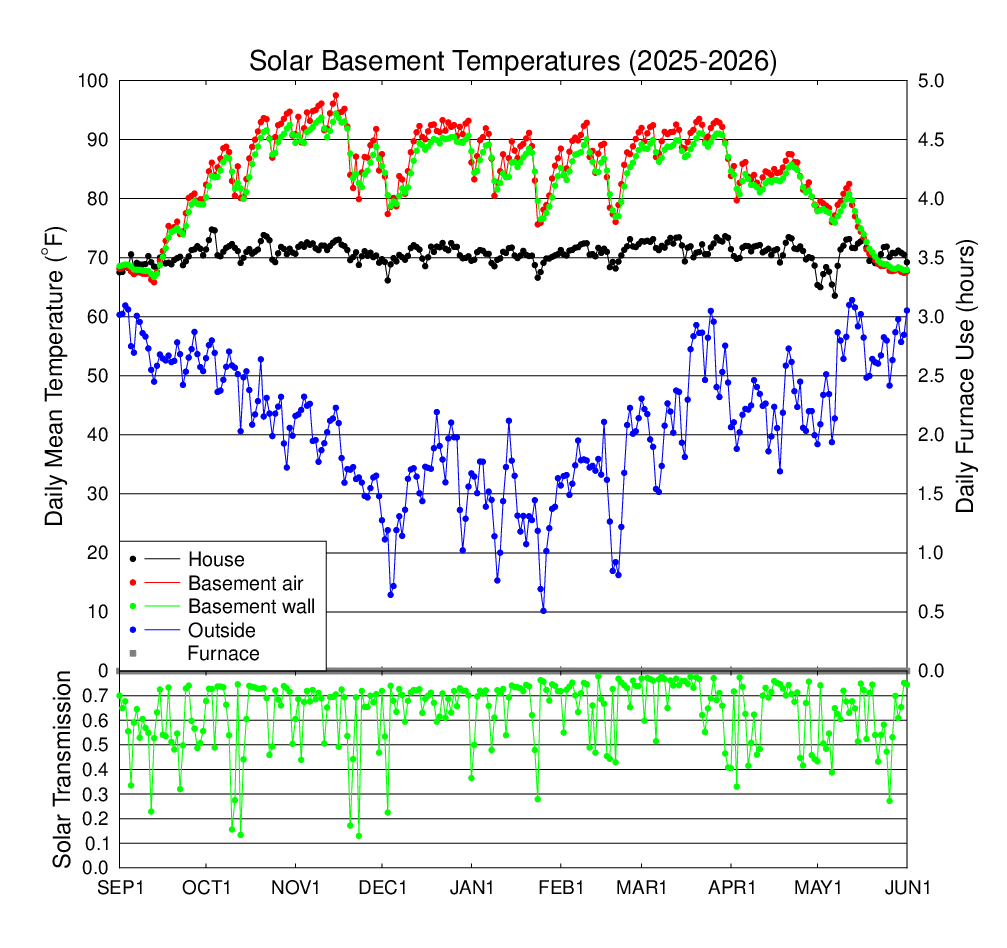
The graph above shows the observed daily average temperatures for the 2025-2026 heating season. The grey squares (along with the y axis on the right edge of the plot) show how many hours per day the backup propane furnace ran. The lower graph shows the ratio of daily average surface solar flux to the top of atmosphere solar flux. The surface solar flux on a horizontal plane is measured by the weather station, and the top of atmosphere solar flux is calculated for the date and location. Sunny days have a solar transmission above 0.7, and cloudy days have lower values.
We used our usual procedure this heating season by running the furnace when really needed. The daily average house temperature fell below 65oF on 2 days in early May (the coldest average house temperature was 63.6o). We were on a 12 day trip in early May and left the basement without window insulation at night and the basement vents to the house were closed. The extraordinary warm weather at the end of March is seen in daily average outside temperatures. The beginning and end of our heating season (when the reflectors were not blocking the basement windows) was September 16 and May 12, respectively.
Click on the graph for a larger version.
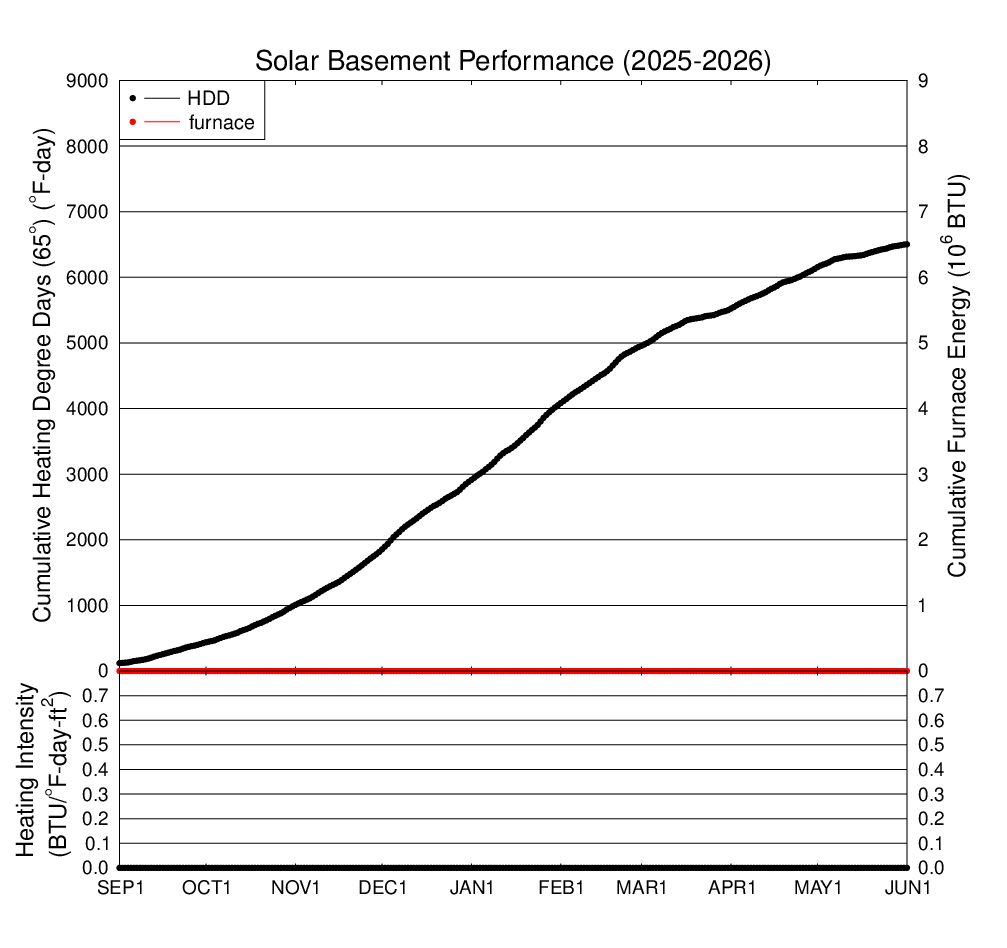
The above graph shows the total heating degree days (HDD) accumulated through the season and total BTUs provided by the propane furnace in our house. These HDD are defined relative to the standard 65oF. The furnace BTUs are calculated using the 70,000 BTU/hour furnace rating and the time the furnace is on as measured by the computer.
This season the furnace was never used because it was a warm winter. The ratio of BTUs to heating degree days divided by the floor area of the house (1508 square feet) is plotted in the lower panel. This ratio is called the heating intensity index, and is a measure of how efficient the house is.